Email : zhou@sinobiochemistry.com Phone : +86-13941198570


 |


| Quantity: | |
|---|---|
MBT
SINOBIO
29342000
MBT, also known as Methylene Bis-Thiocyanate, Methylene Dithiocyanate or Dithiocyanatomethane, is a broad-spectrum biocide with CAS No. 6317-18-6. Sinobio MBT has an assay of ≥99.0% and is supplied as a pale yellow free-flowing powder or crystal.
Methylene Bis Thiocyanate is widely used for microbial control in leather, water treatment, circulating cooling water, oilfield water treatment, coatings, rubber, wood and other industrial applications. It can provide fungicidal, bactericidal and algicidal activity for formulations and treatment systems where microbial growth needs to be controlled.
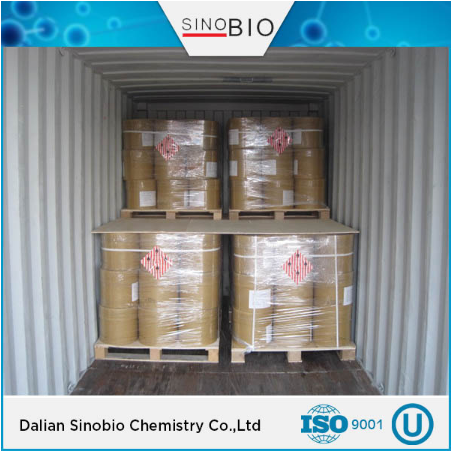
MBT has a molecular formula of C3H2N2S2 and a molecular weight of 130.19. The product has good stability under acidic conditions and is available in 20 kg cartons or 25 kg drums, with customized packaging available for different order quantities.
Sinobio supplies MBT CAS 6317-18-6 for industrial and commercial applications, with product specifications, samples, packaging and bulk supply available according to customer requirements.
MBT (Methylene Bis Thiocyanate) has the CAS number 6317-18-6. The following is a detailed description of it:
Product Name: Methylene Bis Thiocyanate (or Methylene Dithiocyanate)
Other Names: Dithiocyanatomethane, Methylene Bisthiocyanate, etc.
Molecular Formula: C3H2N2S2
Molecular Weight: 130.19
CAS Number: 6317-18-6
EINECS Number: 228-652-3
Appearance: White or light yellow needle-shaped crystals
Melting Point: 100-106°C
Solubility: Sparingly soluble in water, but soluble in organic solvents such as dioxane and dimethylformamide, and slightly soluble in other organic solvents. Its solubility is low in room temperature water, but greatly increases in hot water.
Stability: Stable under acidic conditions, hydrolyzing when the pH exceeds 8.5. Its hydrolysis products are thiocyanate, formaldehyde and a small amount of sulfide, which are low in toxicity and therefore will not cause environmental pollution.
Methyl dithiocyanate is a highly effective, broad-spectrum fungicide and algaecide, highly effective against major bacteria, fungi, and algae in circulating water, with long-lasting efficacy. It is suitable for a variety of applications, including oilfield water treatment, circulating cooling water treatment, and the control of marine growth on the hulls of ocean-going vessels.
Methyl dithiocyanate can be formulated into a 1% emulsifiable concentrate, which is a highly effective, broad-spectrum, and safe fungicide for crops. It is highly effective against rice bakanae (bakanae) and stem tip nematode disease, barley stripe, web blotch, and hard smut. It also has excellent control effects against other diseases caused by seed-borne bacteria, fungi, and nematodes.
Methyl dithiocyanate can be formulated into a pollution-free fish medicine suitable for water disinfection and sterilization in various aquaculture applications.
Dithiocyanomethane can also be used for anti-corrosion, sterilization and algaecide of electrical materials, bamboo and wood products, coatings, rubber, leather, canvas, paste, ink, etc.
The advantages of Methylene Bis Thiocyanate (MBT) lie primarily in its high efficiency and broad-spectrum bactericidal activity, low toxicity and environmental friendliness, long-lasting stability, and strong compatibility with other agents. These advantages are as follows:
MBT has a potent bactericidal effect against bacteria, molds, algae, and protozoa, with particular effectiveness against sulfate-reducing bacteria, common bacteria found in industrial circulating water. At a dosage of 3-4 ppm, it achieves a bactericidal rate exceeding 99% against heterotrophic bacteria, Escherichia coli, and iron-bacterial bacteria, and is adaptable to a wide pH and temperature range.
MBT hydrolyzes into thiocyanate, formaldehyde, and a small amount of sulfide, which are low in toxicity and readily degrade, thus minimizing environmental pollution. Its non-oxidizing properties prevent loss of activity due to contaminants or debris in the water, thus meeting environmental requirements.
The stock solution is highly stable, maintaining its efficacy over a long period of time, and providing long-term microbial growth inhibition. In soil treatment, although its inhibitory effects on fungi, actinomycetes, and nematodes gradually weaken over time, it still maintains some effectiveness for 50 days. It can also stimulate bacterial proliferation and promote soil respiration.
It exhibits good compatibility with other antifungal agents, often exhibiting synergistic effects and enhancing overall fungicidal and antifungal capabilities.