Email : zhou@sinobiochemistry.com Phone : +86-13941198570


Views: 0 Author: Site Editor Publish Time: 2026-11-20 Origin: Site


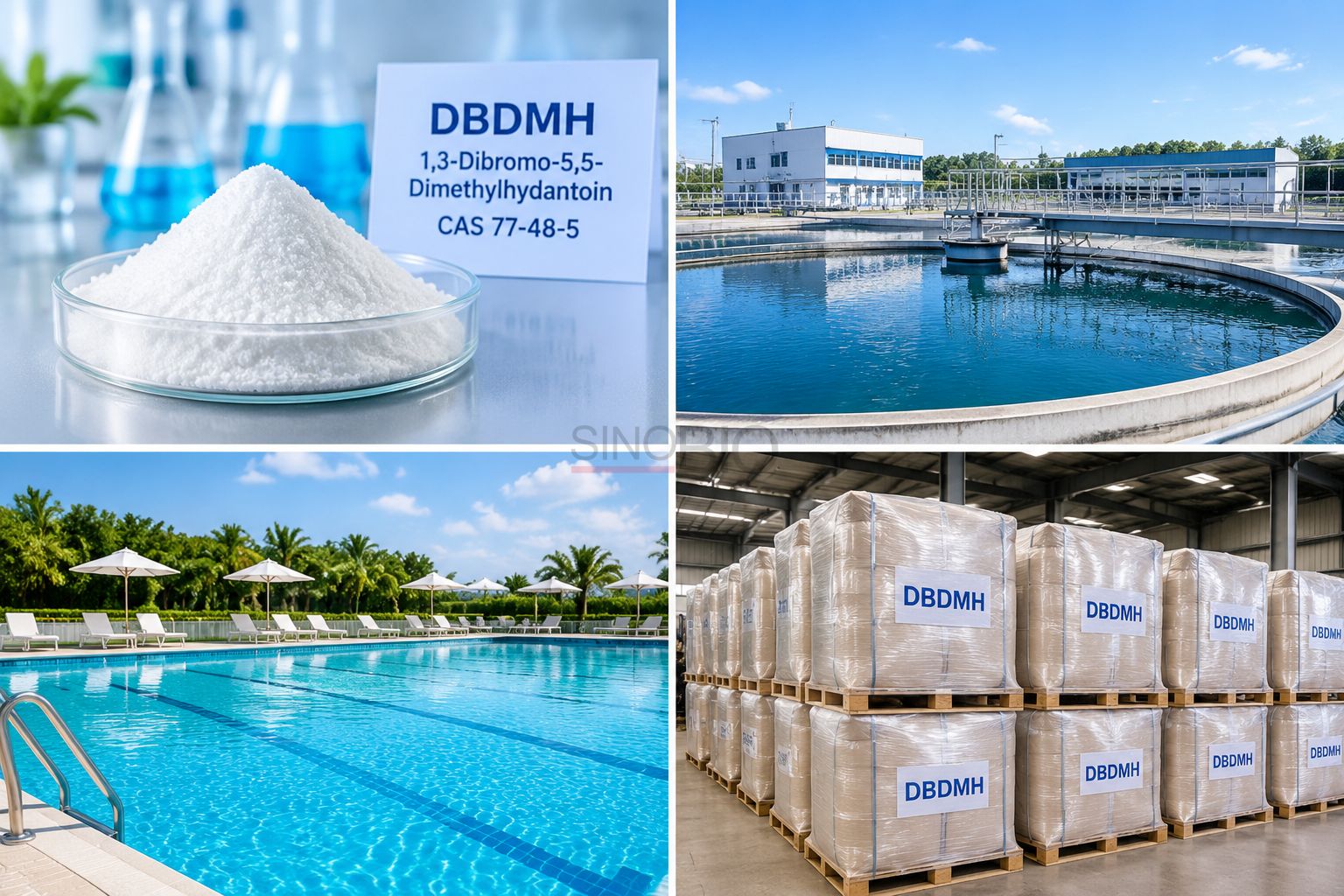
DBDMH (1,3-dibromo-5,5-dimethylhydantoin, CAS 77-48-5) is a solid bromine-releasing hydantoin biocide derived from dimethylhydantoin.
As global demand for safe water—municipal drinking water, recreational pools, aquaculture, industrial cooling systems, and pulp and paper process water—keeps rising, and as pharmaceutical and agrochemical producers look for safer brominating agents, the limitations of conventional disinfection have become harder to work around: chlorine generates chloramines and chlorinated by-products, loses efficacy as pH rises, and irritates eyes and skin; liquid bromine is corrosive and hazardous to handle and transport.
DBDMH addresses these problems at once. It is a white to light-yellow crystalline powder that is stable when dry, releases active bromine in a controlled manner, works across the alkaline pH range typical of pools and cooling towers, has only a slight bromine odor, and leaves residues that biodegrade quickly without secondary pollution.
It is also an efficient electrophilic brominating agent for organic synthesis. In short, DBDMH delivers a high-purity, high-active-bromine, easy-to-dose solution for both disinfection and industrial bromination.
DBDMH has a molecular formula of C₅H₆Br₂N₂O₂ and a molecular weight of 285.94 g/mol. Its structure—two bromine atoms bonded to the nitrogen atoms of a dimethylhydantoin ring—gives it the properties that matter most in industrial use:
Assay ≥98% (99% grade available for synthesis applications), active bromine ≥54.8% (theoretical 55.9%), drying loss ≤0.5%. Each kilogram of product delivers roughly 550 g of active bromine, so the amount of product needed per cubic meter of treated water stays low.
Melting point 185–192 °C. The product is stable when kept dry and sealed, with no significant loss of activity in normal warehouse storage. In water it releases hypobromous acid progressively rather than all at once, which is why granular grades give either an instant shock effect or a sustained slow-release effect depending on mesh size.
Sparingly soluble in water, readily soluble in chloroform, ethanol and other organic solvents. This low water solubility is an advantage in solid dosing systems: tablets and granules dissolve at a predictable rate, resist caking, and do not clog feeders or erosion devices.
Stable and most effective in neutral to slightly acidic media (pH 5–7), and the released hypobromous acid remains active well into the alkaline range where chlorine chemistry fails. It decomposes readily in strong acids and strong alkalis, so it should not be blended with those materials. Spent residue biodegrades within a short period and leaves no persistent pollution—and, unlike stabilized chlorines, it introduces no cyanuric acid.
Its core value lies in the bromine chemistry of the hydantoin ring. When dissolved, DBDMH hydrolyzes to release hypobromous acid (HOBr) and active bromine; the hypobromous acid then oxidizes the proteins, enzymes and membrane structures of bacteria, fungi, algae and spores, and the liberated bromine species brominate nitrogen-containing sites in microbial cells, disrupting their metabolism. The result is a fast, broad-spectrum kill that does not depend on chlorine and is not neutralized by the ammonia and organic load that rapidly exhaust chlorine-based systems.
Because HOBr remains effective at higher pH and penetrates biofilm more readily than hypochlorous acid, DBDMH controls slime, algae and biofouling in cooling systems and pools where chlorine dosing would otherwise have to be pushed to very high levels. It is low in toxicity at use concentrations, non-corrosive to most equipment at recommended dosages, and compatible with the pH, hardness and alkalinity ranges found in real water systems. In organic synthesis the same electrophilic bromine is used deliberately: DBDMH serves as a convenient, solid, easy-to-meter brominating and oxidizing reagent for aromatic bromination and for bromination steps in pharmaceutical and agrochemical intermediates, replacing hazardous liquid bromine.
With a high active-bromine load, controlled release and wide pH tolerance, DBDMH has become a standard raw material across several sectors:
Used for disinfection and for controlling bacteria, algae and biofilm in distribution and storage systems. It produces no chloramine taste or odor and no chlorinated by-products at typical dosages, which matters for potable water quality compliance.
Applied as shock granules, slow-release granules or tablets. It clears combined bromine and organic-bound chlorine, keeps water clear at pH 7.4–7.8, reduces eye and skin irritation, and holds residual activity through heavy bather load and high summer temperatures.
The primary biocide for cooling towers, once-through systems, and process and utility water, where it controls algae, slime and Legionella risk, keeps heat-exchange surfaces clean, and maintains efficiency without the odor and corrosion problems of chlorine gas or hypochlorite.
Used in hatcheries, ponds and shrimp and fish farming for water and facility disinfection, and for sanitizing equipment, because of its low toxicity to stock at recommended doses and its fast biodegradation.
Applied for slime control in white water systems, and as an oxidative bleaching and bromination aid in pulp and paper processing.
Used for surface, equipment and facility disinfection in hospitals, hotels, food plants and livestock facilities, where a low-odor, non-irritating, residue-free disinfectant is required.
Used as a solid brominating and oxidizing agent in the manufacture of fine chemicals, pharmaceutical intermediates and agrochemical actives, offering safer handling than liquid bromine and better selectivity than harsh bromine complexes.
Our DBDMH is offered in the specifications that cover both disinfection and synthesis applications:
* Grades: Assay ≥98% (standard biocide grade) and ≥99% (synthesis and pharmaceutical-intermediate grade); active bromine ≥54.8%; drying loss ≤0.5%.
* Forms: Crystalline powder; 8–30 mesh granules in instant-release and slow-release versions for erosion feeders and shock dosing; and compressed tablets for pool and spa retail applications.
* Packaging: 25 kg net PP woven bags with sealed PE inner liner, fiber drums for export consolidation, and 1 kg / 5 kg / 10 kg small packs for distribution and end-user channels; full pallet configurations, with neutral or customer-branded packaging on request.
* Storage and Shelf Life: Store in a cool, dry, ventilated place, sealed and away from direct sunlight, strong acids, strong alkalis and reducing agents. Shelf life is 12 months in unopened packaging under the recommended conditions.

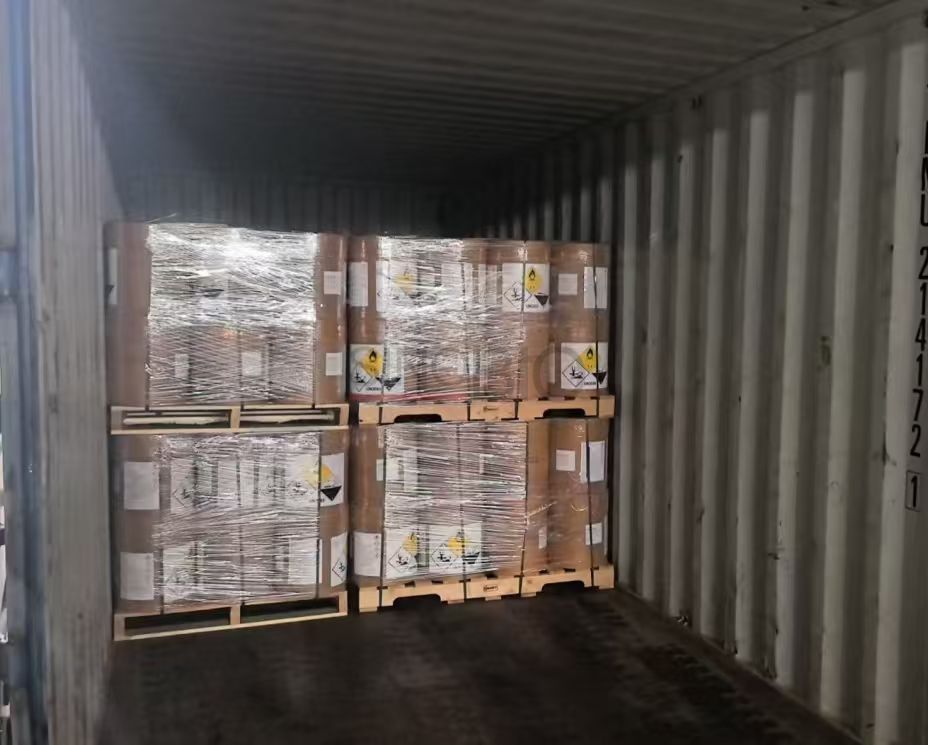
DALIAN SINOBIO CHEMISTRY CO., LTD. is a specialized enterprise focused on the R&D and production of fine chemicals, biocides and pharmaceutical intermediates, and a reliable supplier of high-purity DBDMH. Our production combines controlled bromination, precision purification and strict end-to-end quality control, so each batch delivers consistent assay, stable active-bromine content and low drying loss—parameters that directly determine dosing accuracy in water treatment and reaction yield in synthesis.
We support customers with grade and mesh selection, dosing guidance for pools, cooling systems and aquaculture, documentation for regulatory and customs requirements, and stable, continuous supply backed by a complete after-sales system. Whether you need a biocide grade for water treatment or a high-assay grade for bromination chemistry, we can deliver the right specification, on schedule.
Any interest, don't hesitate to contact us.
DALIAN SINOBIO CHEMISTRY CO., LTD.
Add: NO. 3, Gaoxin Street, Hi-tech industrial zone, Dalian, China
TEL & FAX: +86-411-8479 6919
mail: zhou@sinobiochemistry.com
Website: www.sinobiochemistry.com


