Email : zhou@sinobiochemistry.com Phone : +86-13941198570


Views: 0 Author: Site Editor Publish Time: 2025-12-08 Origin: Site


Water treatment chemicals help you provide clean water for your home, your school, and your community.
Common water treatment chemicals:
Disinfectants
Coagulants
Flocculants
pH adjusters
Specialty chemicals
Water treatment chemicals help keep water safe and clean. These chemicals include disinfectants, coagulants, flocculants, pH adjusters, and special agents.
Disinfectants such as chlorine and ozone kill germs in water. Each disinfectant works in its own way and has good and bad points. Pick the right one for your needs.
Coagulants and flocculants help get rid of pollution. They make tiny bits stick together and form bigger clumps. These clumps are easier to filter out.
Keeping the pH level right in water is very important. pH adjusters like lime and soda ash stop pipes from rusting. They also make sure water is safe to drink.
Always test your water after you treat it. This makes sure there are no harmful things left. Following safety rules keeps people and nature safe.
Disinfection is very important in water treatment. Disinfectants kill bacteria, viruses, and other bad germs. Disinfection helps remove harmful things from water. This makes water safe for drinking and other uses. You should know how each disinfectant works. You also need to know why you pick one over another.
Disinfection keeps you healthy and makes water clean for daily use.
Chlorine is the most used chemical for disinfection. You add chlorine to water to kill germs. Chlorine reacts with harmful things in water. It helps with oxidation of contaminants. Many cities use chlorine in their water systems. Chlorine works fast and does not cost much. You must check chlorine levels often. Too much chlorine can change the taste and smell. Chlorine can also make byproducts when it reacts with some things.
You use chloramine for longer-lasting disinfection. Chloramine is made by mixing chlorine and ammonia. Chloramine stays in water longer than chlorine. You use it to control germs in big water systems. Chloramine does not make as many byproducts as chlorine. You need to test water often. Chloramine can affect people with kidney problems.
Ozone is a strong disinfectant. You use ozone to kill germs and break down harmful things. Ozone works by oxidation of contaminants. You make ozone at the place where you use it. Ozone does not store well. Ozone does not change the taste or smell of water. You use ozone in bottled water plants and some city systems. Ozone does not stay in water long. You may need another chemical for ongoing protection.
You use ultraviolet (UV) light to disinfect water. UV disinfection does not use chemicals. UV light kills germs and other bad things. Water passes through UV lamps. The light damages the DNA of germs. UV disinfection does not change taste or smell. You use UV in homes, hospitals, and small water systems. UV does not give ongoing protection. You may need to use other methods too.
Glutaraldehyde is a strong disinfectant and biocide. You use glutaraldehyde in factories and cooling towers. Glutaraldehyde attacks germs and helps with oxidation of contaminants. You must be careful when using glutaraldehyde. It can irritate your skin and eyes. You use glutaraldehyde for fast and strong disinfection.
Cmit/Mit means chloromethylisothiazolinone and methylisothiazolinone. You use these chemicals in factory water systems. Cmit/Mit controls germs, fungi, and algae. You use Cmit/Mit in cooling water, paper mills, and oil fields. Cmit/Mit helps stop the growth of harmful things. It keeps water systems clean.
You use tetrakis(hydroxymethyl)phosphonium sulfate (THPS) for disinfection. THPS also helps with oxidation of contaminants. THPS works well against germs and fungi. You use THPS in oil and gas work, factories, and cooling towers. THPS breaks down fast. It does not harm nature as much as some other chemicals. You pick THPS for strong disinfection and less harm to the environment.
Benzalkonium chloride (BKC) is a disinfectant and biocide. You use BKC to control germs, algae, and fungi in water. BKC works well in pools, factories, and wastewater treatment. BKC helps remove harmful things and keeps water safe. You must follow safety rules when using BKC. It can irritate your skin.
Bronopol is a chemical used for disinfection in factories. Bronopol attacks germs and helps with oxidation of contaminants. You use bronopol in cooling towers, oil fields, and paper mills. Bronopol works well even in small amounts. It helps control harmful things in water. You must store bronopol the right way. It can break down over time.
Tip: Always test water after disinfection. This makes sure you removed all harmful things and the water is safe.
Disinfectant | Main Use | Strengths | Limitations |
|---|---|---|---|
Chlorine | Drinking water, pools | Works fast, not expensive | Byproducts, taste/smell |
Chloramine | City water systems | Lasts long, fewer byproducts | Needs checking |
Ozone | Bottled water, factories | Strong, no taste/smell | No lasting protection |
UV Disinfection | Homes, hospitals | No chemicals, safe | No ongoing protection |
Glutaraldehyde | Factories, cooling towers | Fast, strong | Safety concerns |
Cmit/Mit | Factories | Controls many harmful things | Safety rules needed |
THPS | Oil/gas, factories | Strong, less harm to nature | Breaks down fast |
BKC | Pools, wastewater | Controls germs/algae/fungi | Can irritate skin |
Bronopol | Factories | Works in small amounts | Storage problems |
Disinfection is needed for water treatment. You must pick the right disinfectant for your water system. Each chemical helps remove harmful things and keeps you healthy. You should know how disinfection works and why it is important for clean water.
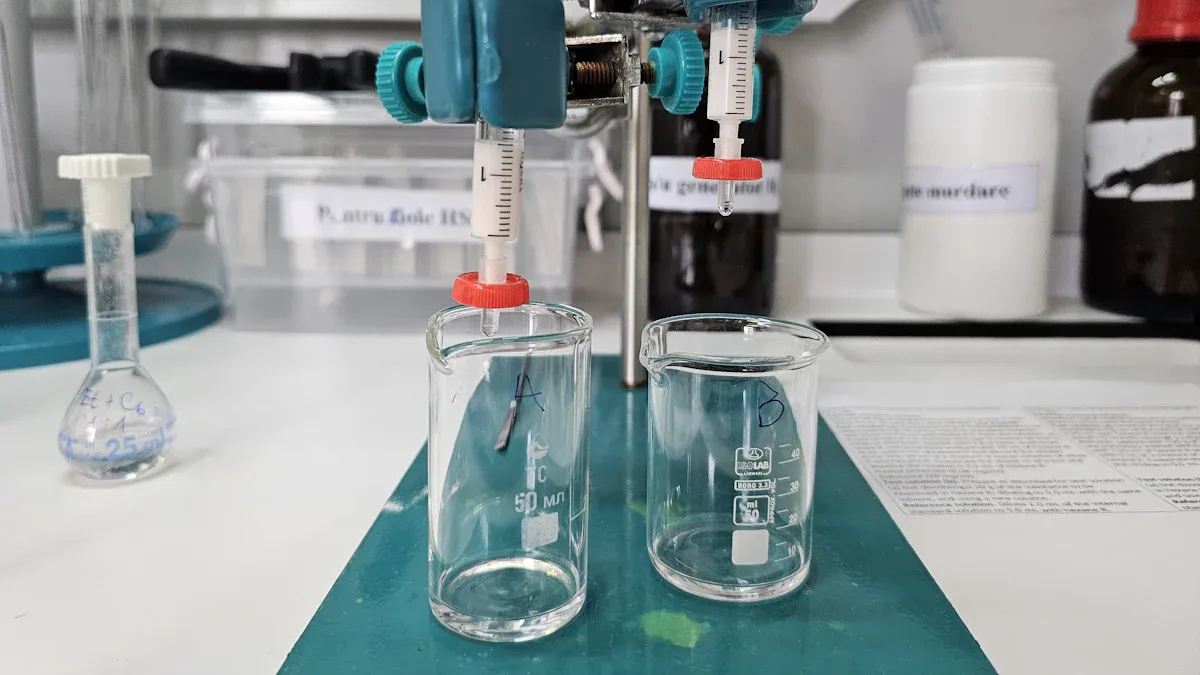
You use coagulants and flocculants to help clean water. These chemicals make tiny bits in water stick together. The small bits join to form bigger clumps called flocs. Flocs sink to the bottom of the tank. You can remove them easily. This helps get rid of things that pollute water.
Tip: Coagulants and flocculants are used in city water plants and factories.
Alum is used in many water treatment plants. It helps gather dirt, clay, and other small bits. Alum works in cold and warm water. You see alum in drinking water and wastewater plants. Alum makes it easier to filter out pollutants.
Ferric chloride is a strong coagulant. You use it for drinking water and industrial wastewater. Ferric chloride helps remove color and heavy metals. It forms solid flocs that settle fast. You pick ferric chloride when you want quick results.
Ferric sulfate works like ferric chloride. It helps clean water by making bits stick together. Ferric sulfate is used in city water plants and factories. It also helps control bad smells in wastewater.
Polyaluminum chloride, or PAC, is a modern coagulant. PAC works at different pH levels. It makes strong flocs and clears water quickly. You see PAC in city water treatment and paper mills.
Polymers are special chemicals that help flocs grow bigger. You use polymers with other coagulants to speed up the process. Polymers help in drinking water and industrial water treatment. They make it easier to remove solids from water.
Chemical | Main Use | Special Feature |
|---|---|---|
Alum | Drinking/wastewater plants | Works in many conditions |
Ferric Chloride | Drinking/industrial wastewater | Removes color, metals |
Ferric Sulfate | Municipal/industrial water | Controls odor |
Polyaluminum Chloride | City water, paper mills | Works at many pH levels |
Polymers | All water treatment | Makes bigger flocs |
You must pick the right coagulant or flocculant for your water system. Each one helps you get cleaner water and removes pollutants.
You need to keep water at the right pH. pH adjusters and conditioners help with this job. These chemicals stop water from getting too acidic or too basic. When you balance the pH, you protect pipes and equipment. You also make sure water is safe to drink and use.
Tip: Keeping pH balanced helps stop pipes from rusting and scaling.
Lime is a common pH adjuster. You add lime to water to make pH go up. Lime makes water less acidic. Many city water plants and factories use lime. Lime helps stop pipes from rusting. It also helps remove hardness from water. You can use lime for drinking water and wastewater.
Soda ash is also called sodium carbonate. Soda ash helps raise the pH of water. You use soda ash when water is too acidic. Soda ash works fast and is easy to use. You see soda ash in pools, city water, and factories. Soda ash helps stop metal pipes from rusting. It also helps control scaling.
Citric acid lowers the pH of water. You use citric acid when water is too basic. Citric acid comes from citrus fruits. Many food and drink plants use citric acid. Citric acid helps clean pipes and remove scale. You can use citric acid in homes and small water systems. It is safe and easy to use.
Hydrochloric acid is a strong pH adjuster. You use hydrochloric acid to lower pH quickly. Hydrochloric acid works well in big factories and water systems. You must be careful when using hydrochloric acid. It can be dangerous if you do not follow safety rules. Hydrochloric acid helps remove scale and keeps pipes clean.
Chemical | Raises pH | Lowers pH | Main Use | Special Note |
|---|---|---|---|---|
Lime | ✅ | Drinking/wastewater | Stops rust, removes hardness | |
Soda Ash | ✅ | Pools, city water | Prevents corrosion | |
Citric Acid | ✅ | Food plants, homes | Safe, cleans scale | |
Hydrochloric Acid | ✅ | Factories, large systems | Strong, needs safety |
You must pick the right pH adjuster for your water system. Each chemical helps keep water safe and protects equipment. Always test the pH after adding these chemicals.
Specialty water treatment chemicals help with special water problems. These chemicals protect membranes, remove bad smells, and stop scale. You use them when regular chemicals do not work for every issue.
Activated carbon helps remove many harmful things. You use it to make tap water taste and smell better. Activated carbon traps tiny bits and chemicals. You find it in home filters and city water plants.
You can get rid of up to 14 pesticides, even dangerous ones like Chlordecone and Lindane.
You can remove 95% of chlorine, which makes water taste better.
You can get rid of 32 chlorine by-products, and some can cause cancer.
You can lower nitrate levels by 50-70%, which helps keep you healthy.
You can catch microplastics, which are bad for people.
Activated carbon works well to remove odors and colors. You use it to get rid of organic chemicals and some metals. You need to change the carbon often to keep it working well.
Anti-scalants stop scale from building up on membranes and pipes. Scale can block water and hurt equipment. Anti-scalants help remove minerals like calcium and magnesium. You add anti-scalants before water goes into filters or reverse osmosis units. You see fewer hard water problems.
Anti-scalants also help remove iron and silica. You use anti-scalants in factories and water plants. Sometimes you mix anti-scalants with anti-foaming agents to keep systems working well.
Tip: Anti-scalants make cleaning easier and help you save money on repairs.
Corrosion inhibitors protect pipes and tanks from rust and damage. You use them to stop corrosion in water systems. Corrosion can cause leaks and make water unsafe. You add corrosion inhibitors to city water, cooling towers, and boilers. You see less rust and better water quality.
Corrosion inhibitors help remove metals that can get into water from pipes. You use them to keep water safe for drinking and for factories.
Chemical | Main Use | How It Helps With Removal |
|---|---|---|
Activated Carbon | Home/city filters | Odor, color, pesticide removal |
Anti-scalants | Membrane protection | Scale, mineral removal |
Corrosion Inhibitors | Pipe protection | Rust, metal removal |
ATMP | Scale/corrosion control | Scale, corrosion removal |
You use ATMP to stop scale and corrosion. ATMP is a strong anti-scalant and corrosion inhibitor. You add ATMP to water systems to keep minerals from sticking to surfaces. You see less calcium, magnesium, and iron scale. ATMP helps remove rust and keeps pipes clean.
You use ATMP in cooling towers, boilers, and reverse osmosis units. ATMP also works with anti-foaming agents to help systems work better.
You need specialty chemicals to fix tough water problems. They help you keep water clean and equipment safe.
You use different chemicals for each type of water. Each job needs special chemicals to clean water and make it safe. You need to know which chemicals work best for drinking water, wastewater, and industrial water.
Drinking water treatment chemicals help make water safe to drink. You need to get rid of dirt, germs, and metals. Salt, aluminum, and iron help stick small bits together. This makes it easier to filter them out. Disinfectants like chlorine and chloramine kill germs in the water. Lime and soda ash help keep the water balanced. Activated carbon takes away bad tastes and smells.
Tip: Always test the water after you treat it. This helps make sure all the bad stuff is gone.
Common chemicals for drinking water treatment:
Chlorine
Chloramine
Alum
Iron salts
Lime
Soda ash
Activated carbon
Wastewater needs stronger chemicals to get clean. It has more bad stuff, like solids, germs, and organic matter. You need chemicals that can break down tough things. Ferric chloride, ferric sulfate, and polymers help clean out solids. Ozone and UV light are used to kill germs. pH adjusters and anti-scalants help protect pipes and machines.
Common chemicals for wastewater treatment:
Ferric chloride
Ferric sulfate
Polymers
Ozone
UV disinfection
Hydrochloric acid
Anti-scalants
Wastewater treatment keeps rivers and lakes safe from pollution.
Factories and plants use chemicals to treat their water. The chemicals you use depend on what the factory makes. Sometimes you need special chemicals to remove oil or heavy metals. Corrosion inhibitors help protect pipes and machines. Anti-scalants and ATMP help keep filters and membranes working well.
Common chemicals for industrial water treatment:
Corrosion inhibitors
Anti-scalants
ATMP
Benzalkonium chloride
Glutaraldehyde
Polyaluminum chloride
Industrial water treatment helps machines work and keeps pollution out of nature.
Here is a table to help you remember which chemicals are used for each kind of water:
Type of Treatment | Chemicals Used | Purpose of Chemicals |
|---|---|---|
Drinking Water | Salt, aluminum, iron | Coagulation to bind particles and form larger flocs |
Wastewater Treatment | Stronger, harsher chemicals | To treat suspended solids and organic matter effectively |
Industrial Water | Varies based on specific industrial needs | Tailored chemicals for specific contaminants and processes |
You need to pick the right chemicals for each job. This helps keep water safe for people, nature, and machines.
You need to be careful with water treatment chemicals. Some chemicals can burn your skin or make it hard to breathe. They can also cause your skin to itch or hurt. Always wear gloves and goggles when you use these chemicals. Put on protective clothes to keep safe. Keep chemicals in containers with labels. Store them away from kids and pets. Never mix chemicals unless you know it is safe. If you spill a chemical, clean it up right away. Follow all safety steps.
Always check the label and follow safety rules for each chemical.
Water treatment makes water clean, but it can hurt nature too. Some chemicals, like chlorine and ammonia, are dangerous if used wrong. When treated water goes into rivers or lakes, leftover chemicals can harm fish and plants. Sometimes, gases from water treatment pollute the air.
Main environmental risks from water treatment chemicals:
Chemical hazards: Chlorine and ammonia are risky if not handled right.
Environmental hazards: Dirty water can pollute rivers and hurt animals.
Air pollution: Some steps release gases that make air worse.
Recent studies show "forever chemicals" and medicine are found in wastewater plants. These chemicals do not break down easily. Less than 25% get removed before water leaves the plant. Most of these chemicals are not controlled by rules. They can build up in nature and may hurt your health over time. You need to watch what goes into your water. Support good chemical treatment for wastewater.
You must follow rules when you use water treatment chemicals. The Environmental Protection Agency (EPA) sets limits for each chemical. These rules help keep you and nature safe. Test water often to make sure it is safe. If you work at a water plant, keep records and report problems. Following these rules helps keep water clean for everyone.
Safety Tip | Why It Matters |
|---|---|
Wear protective gear | Stops burns and injuries |
Store chemicals safely | Keeps people and pets safe |
Test water regularly | Makes sure water is safe |
Good water treatment protects people and nature. You help by following safety rules and caring for the environment.
You learned about different water treatment chemicals. These include disinfectants, coagulants, flocculants, pH adjusters, and specialty agents. You must pick the right chemicals for your water. Always test your water to see what needs to be removed. Think about what you want to achieve with water treatment. You should also think about your budget and safety rules. Use good tools to check if your water treatment works. Sensors and lab tests help you do this. New methods, like turning acid mine drainage into ferric chloride, can remove more pollution. Safe water treatment helps protect your health and the environment. If you have questions, ask a water treatment expert or your local agency.
When you choose water treatment chemicals, remember:
Test your water for certain contaminants.
Know what you want to achieve.
Think about costs for storage and disposal.
Follow all safety rules.
To check your water treatment process, you can:
Collect samples for lab tests.
Use pumps and controllers with sensors.
Try automatic devices for quick checks.
Use remote monitoring for better information.
Water treatment keeps your water safe. Make smart choices and always stay informed.
You usually find chlorine as the main disinfectant in drinking water. Chlorine kills germs quickly and keeps water safe. Many cities use it because it works well and costs less.
No, you should not drink water right after adding chemicals. You need to let the chemicals work and then test the water. This makes sure the water is safe for you.
Most water treatment chemicals are safe when you use them correctly. If you use too much or dispose of them wrong, they can harm fish and plants. Always follow safety rules.
You test your water to find out what it needs. You choose chemicals based on what you want to remove, like germs or metals. You can ask a water expert for help.
Some chemicals, like chlorine, can change the taste or smell of water. You can use activated carbon filters to help remove these tastes and make water better.


