Email : zhou@sinobiochemistry.com Phone : +86-13941198570


Views: 0 Author: Site Editor Publish Time: 2026-04-28 Origin: Site


If you want a cosmetic formulation that balances safety, versatility, and support for the skin barrier, 1,2-hexanediol often stands out as the better choice. This ingredient offers reliable antimicrobial action and helps your skin retain moisture, making it a favorite among formulators. Ingredient choice directly affects product performance and your skin’s health, as shown in the table below:
Ingredient | Impact on Skin Health | Potential Risks |
|---|---|---|
PEGs | Low cutaneous toxicity, weak irritants | Can contain carcinogenic impurities |
Petrolatum | Widely used, potential health risks | Contaminants from hydrocarbons |
Acrylates | Weakly irritants | Possible allergenic activity |
Polysorbates | Less irritants | Cases of contact dermatitis reported |
Many brands combine 1,2-hexanediol with caprylyl glycol for enhanced results. You should look at efficacy, safety, compatibility, and practical use when choosing ingredients.
1,2-Hexanediol is a cost-effective ingredient that boosts moisture retention and acts as a strong preservative, making it ideal for barrier support.
Caprylyl glycol enhances the sensory feel of products, providing a silky texture while also serving as a broad-spectrum preservative.
Combining both ingredients in formulations can maximize hydration, improve preservation, and strengthen the skin barrier for healthier skin.
Both ingredients have excellent safety profiles, making them suitable for sensitive skin and a great alternative to harsher preservatives.
When choosing between the two, consider your product goals: use 1,2-hexanediol for budget-friendly options and caprylyl glycol for richer textures and eco-friendliness.
You will often find 1,2-hexanediol in modern skin care. This ingredient comes from synthetic sources and belongs to the glycol family. It acts as a small diol, which means it has two alcohol groups. This structure allows it to attract water and provide light humectancy. You can see 1,2-hexanediol in many formulations, including baby care, bath products, and hair care. It works well as a conditioning agent and as one of the most effective preservatives. Its amphiphilic structure helps disrupt microbial membranes, which boosts its preservative power. You may also notice that 1,2-hexanediol supports the skin barrier, especially when paired with ceramides.
Caprylyl glycol is another synthetic glycol that you will see in a wide range of skin care products. It has a slightly different structure from 1,2-hexanediol, but it also acts as a conditioning agent and preservative. Caprylyl glycol stands out for its ability to enhance the feel of your skin. It makes products feel soft and smooth. You will find caprylyl glycol in baby care, wipes, and even eye care. It also boosts the effectiveness of other preservatives, such as phenoxyethanol, making it a valuable addition to many formulations. When you use products with caprylyl glycol, you often get a pleasant sensory experience.
Both 1,2-hexanediol and caprylyl glycol play important roles in skin care. You will see them used as:
Preservatives that help reduce the need for parabens
Moisturizers that support hydration and the skin barrier
Conditioning agents that improve product texture
Ingredient | Chemical Function | Product Applications |
|---|---|---|
1,2-Hexanediol | Conditioning, Preservation | Baby Care, Bath & Shower, Eye Care, Hair Care, Hair Cleansing, Lip Care, Skin Care, Wipes |
Caprylyl Glycol | Conditioning, Preservation | Baby Care, Bath & Shower, Eye Care, Hair Care, Hair Cleansing, Lip Care, Skin Care, Wipes |
You can often find these glycols in products that also contain ceramides. This combination helps strengthen your skin’s natural barrier and keeps moisture locked in. When you choose formulations with 1,2-hexanediol and caprylyl glycol, you get safer, more effective products that support healthy skin.
You want your skin to feel soft, healthy, and protected. Both 1,2-hexanediol and caprylyl glycol help you achieve this by acting as powerful moisturizers. These glycols attract water and hold it in your skin, which boosts hydration and keeps your skin barrier strong. When you use a moisturizing cream with these ingredients, you support your skin’s natural repair process. This helps your skin barrier function at its best.
A good moisturizer does more than just add moisture. It repairs the barrier and prevents water loss. 1,2-hexanediol works as a humectant, drawing water into the skin. Caprylyl glycol adds a silky feel and helps your skin stay smooth. When you use products with both glycols, you get a double boost for hydration and repair. This combination supports the skin’s protective barrier and helps your skin recover from dryness or irritation.
Preservatives play a key role in keeping your skincare products safe. 1,2-hexanediol and caprylyl glycol both act as effective antimicrobial agents. They protect your skin and your products from harmful bacteria and fungi. 1,2-hexanediol mixes well with water and disrupts microbial membranes. This makes it a strong choice for keeping products fresh.
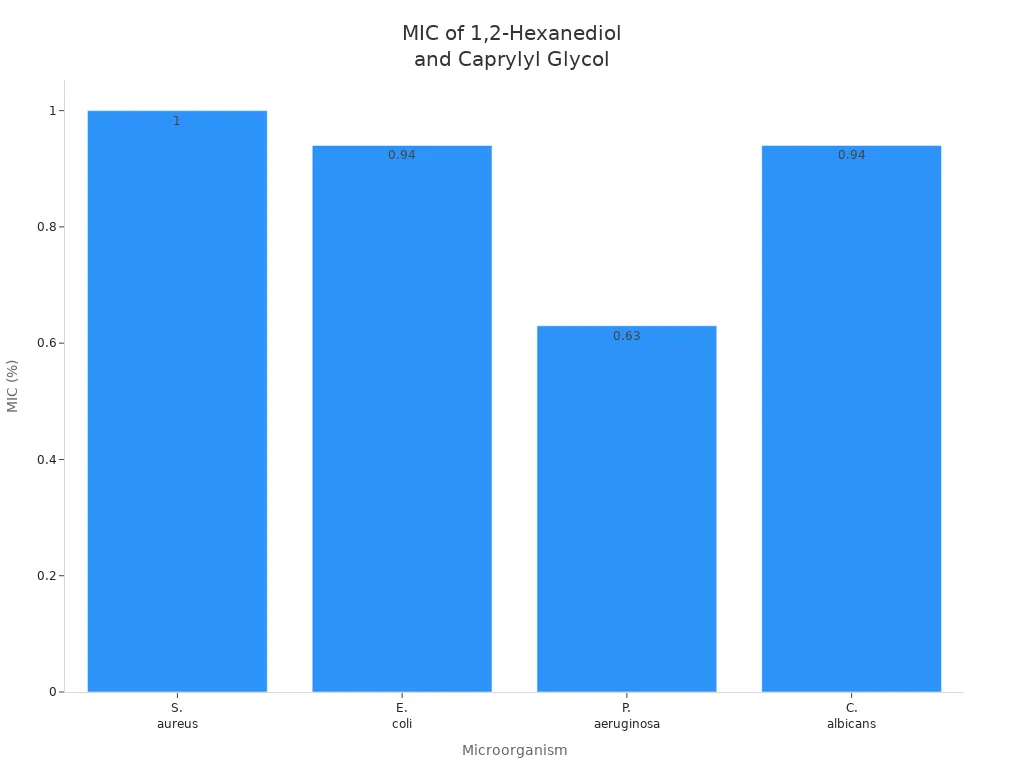
You can see how effective 1,2-hexanediol is against common microorganisms in the table below:
Microorganism | MIC (%) |
|---|---|
S. aureus | 1 - 2.5 |
E. coli | 0.94 - 1.25 |
P. aeruginosa | 0.63 - 1 |
C. albicans | 0.94 - 1.25 |
Caprylyl glycol also fights microbes by breaking down their cell membranes. This action increases the effectiveness of the preservative system in your moisturizing cream or lotion. Caprylyl glycol works well alone or with other preservatives. Its emulsifier-like structure helps it blend into many formulas.
You benefit from this antimicrobial power because your products stay safe and stable. Both glycols help reduce the need for harsher preservatives, which can irritate your skin. This means you get gentle, effective protection for your skin barrier.
Caprylyl glycol enhances antimicrobial potency due to its emulsifier-like structure, disrupting cellular integrity.
It has proven efficacy when used alone or with other antimicrobial agents.
When you combine 1,2-hexanediol and caprylyl glycol, you get more than just two preservatives. You create a synergy that boosts your skin’s protective barrier. These glycols work together to repair and strengthen the barrier, making it harder for irritants to get in and moisture to escape.
Studies show that mixtures with caprylyl glycol help restore balance to your skin’s microbiota. 1,2-hexanediol also supports eubiosis, which means your skin barrier stays healthy and balanced. This teamwork leads to better repair and less irritation. You notice fewer dry patches and a smoother, more resilient skin surface.
You can trust that using both glycols in your moisturizing cream or lotion will support your skin barrier function. This combination repairs damage, locks in moisture, and keeps your skin’s protective barrier strong. You get the benefits of hydration, antimicrobial defense, and lasting repair—all in one formula.
You want your skin to feel safe and protected when you use barrier repair products. Both 1,2-hexanediol and caprylyl glycol have excellent safety profiles. Regulatory agencies like the FDA and the EU approve these ingredients for use in skin formulations. You can trust them in ceramide-rich creams, lipid-replenishing balms, and other barrier repair products. These glycols do not contain harmful epoxides or peroxides. They work well as preservatives and support barrier repair ability in many occlusive and effective occlusives.
Here is a quick look at their safety profile:
Aspect | Details |
|---|---|
Safety Profile | Excellent safety and toxicological profile (free of epoxides and peroxides) |
Benefits | Good moisturizer with anti-microbial properties, improves color vividness in cosmetics, acts as a lubricant, compatible with various cosmetic systems, provides better skin barrier protection |
Typical Use Level | 0.5 - 1.5% |
Applications | Hair and skin cosmetics, bath products |
You may worry about irritation or allergic reactions from skincare preservatives. Research shows that both 1,2-hexanediol and caprylyl glycol have low irritation and allergenic potential. These ingredients rarely cause problems for your skin, eyes, or lungs. You can use them in barrier repair products, ceramide complex formulas, and occlusive creams without concern for most users. They help repair the skin barrier and support barrier lipids, making them a comprehensive and effective solution for sensitive skin.
The Environmental Working Group (EWG) rates both glycols as very safe:
Ingredient | EWG Rating | Allergenic Potential |
|---|---|---|
1,2-Hexanediol | 1 | Low irritation to skin, eyes, or lungs |
Caprylyl Glycol | 1 | No specific allergenic concerns listed |
If you have sensitive skin, you need gentle ingredients that support barrier repair and barrier lipids. Both 1,2-hexanediol and caprylyl glycol work well in ceramide complex and occlusive formulations. They help repair the barrier and keep moisture in. You will find these glycols in many barrier repair products, including creams with ceramides and effective occlusives. They blend well with ceramide complex and barrier lipids, making them ideal for lipid-replenishing balms and occlusive creams. You get a comprehensive and effective solution for barrier repair ability and skin health.
Tip: Look for skincare preservatives like 1,2-hexanediol and caprylyl glycol in your barrier repair products. They help repair your skin and protect your barrier lipids.
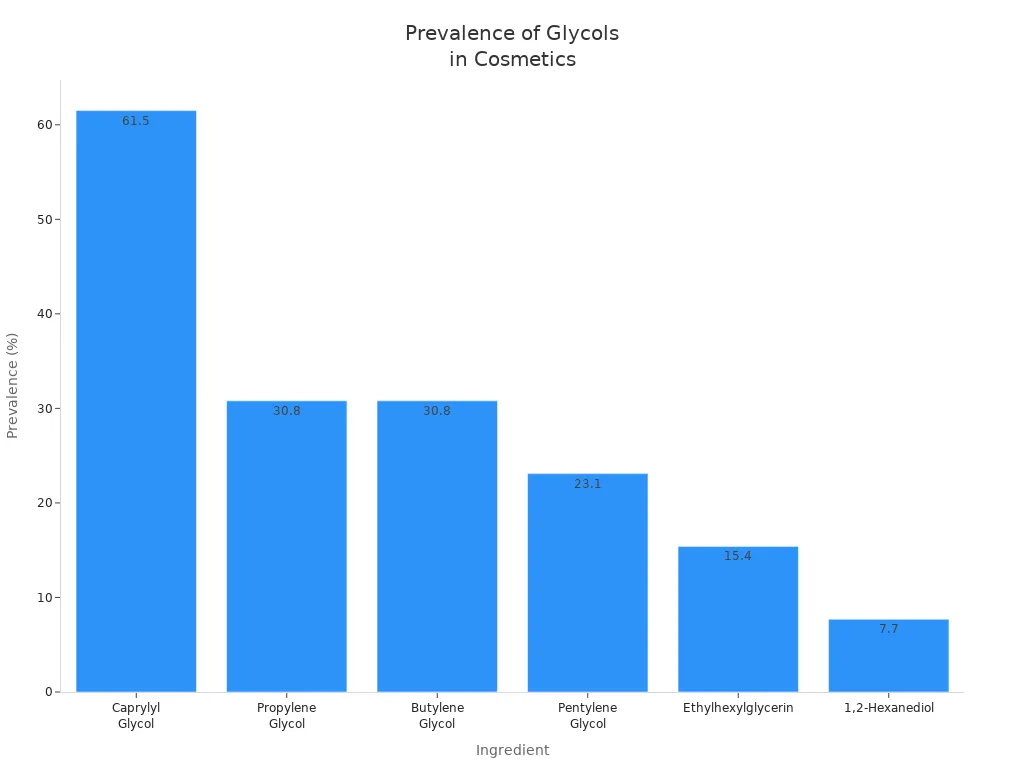
You want your skin care products to work well with many ingredients. Both 1,2-hexanediol and caprylyl glycol show strong compatibility in formulations. You can blend them with ceramides, ceramide complex, and barrier lipids. This helps you create creams and lotions that support barrier repair and hydration. 1,2-hexanediol helps disperse pigments evenly in makeup, so you get smooth color. Caprylyl glycol boosts the power of other preservatives, like phenoxyethanol, making your products safer for the barrier. You can see how often these ingredients appear in products:
1,2-hexanediol and caprylyl glycol both enhance antimicrobial activity.
Caprylyl glycol works alone or with other antimicrobial agents.
Both ingredients have strong safety records and multifunctional roles.
You need your barrier repair creams and occlusives to stay stable over time. Both 1,2-hexanediol and caprylyl glycol help keep formulations fresh by fighting bacteria and yeast. Their antimicrobial properties protect your barrier and barrier lipids. Caprylyl glycol’s emulsifier-like structure increases its antimicrobial effect, which supports the barrier. However, it can change the thickness of some occlusive creams. If you notice a change in viscosity, you might try alternatives like decylene glycol. 1,2-hexanediol has a shelf life of at least two years when stored in a cool, dry place. This makes it a reliable choice for long-lasting barrier repair and ceramide complex products.
You want your creams and occlusives to feel good on your skin. 1,2-hexanediol gives a light, non-sticky slip, so your barrier feels smooth and hydrated. Caprylyl glycol adds a richer, silkier feel, which makes occlusive creams more pleasant. Both ingredients support the barrier and help repair dry or damaged skin. You can use them in ceramide complex and occlusive formulas to boost comfort and barrier repair. The table below shows how each glycol affects texture and barrier support:
Ingredient | Primary Role | Sensory | Antimicrobial Support | Typical Use% |
|---|---|---|---|---|
1,2-Hexanediol | Humectant, booster | Light slip, low tack | Good vs. bacteria/yeast | 0.5–3% |
Caprylyl Glycol | Emollient, booster | Richer slip | Very good | 0.5–1.5% |
Tip: Choose the right glycol for your barrier repair and occlusive needs. You can blend both for the best results in ceramide complex and barrier lipids support.
When you select ingredients for your skincare formulations, cost and ease of use matter. Both 1,2-hexanediol and caprylyl glycol blend easily into most products. You can add them to creams, lotions, and serums without special equipment. These preservatives work well at low concentrations, which helps you keep your formulas simple and effective.
Here is a quick look at their cost differences:
Ingredient | Cost Comparison |
|---|---|
1,2-Hexanediol | Generally less expensive |
Caprylyl Glycol | Moderate to slightly higher cost |
If you want to manage your budget, you may choose 1,2-hexanediol more often. Caprylyl glycol costs a bit more, but it can improve the feel of your products and boost the power of other preservatives.
You will notice a growing demand for clean beauty and safe preservatives. Many consumers now look for products that use 1,2-hexanediol and caprylyl glycol because these ingredients offer moisturizing, humectant, and antimicrobial benefits. The clean beauty movement encourages brands to use non-toxic preservatives in their formulations. As people become more aware of personal hygiene, they spend more on skincare products that feature these ingredients.
You should consider several factors when picking preservatives for your formulations. If you want a cost-effective option with strong antimicrobial action, 1,2-hexanediol works well. Caprylyl glycol suits you if you need a richer texture or want a vegan, biodegradable ingredient. You can also combine both for enhanced protection and a balanced skin feel.
Environmental impact may guide your choice:
1,2-hexanediol comes from 1-hexene, which can harm plants and animals if released.
Caprylyl glycol is vegan, made through a catalytic process, and is readily biodegradable.
Tip: For eco-friendly formulations, caprylyl glycol may be the better choice. For budget-friendly and effective preservatives, 1,2-hexanediol stands out. Using both can give you the best of both worlds.
You may wonder how 1,2-hexanediol and caprylyl glycol compare when you look at their main features. Here is a quick summary to help you see the differences:
1,2-hexanediol acts as a humectant, solvent, and preservative booster. It works well across a wide pH range and has low irritation potential.
Caprylyl glycol provides strong antimicrobial properties and moisturizing effects. It is a safe alternative to traditional preservatives and rarely causes irritation.
1,2-hexanediol boosts the performance of other preservatives and improves emulsions and foam in cleansers.
Caprylyl glycol gives a richer feel to occlusives and enhances the effect of other preservatives.
Both ingredients support the barrier and help retain moisture in the skin.
You can also see the main differences in the table below:
Feature | 1,2-Hexanediol | Caprylyl Glycol |
|---|---|---|
Main Function | Humectant, solvent, booster | Emollient, antimicrobial, booster |
Preservatives Role | Broad-spectrum preservative | |
Texture Impact | Light slip, low tack | Rich, silky feel |
Compatibility | Wide pH range, boosts foam | Enhances other preservatives |
Safety | Low irritation | Very low irritation |
Popular Use | K-beauty serums, cleansers | Moisturizers, occlusives |
Note: Both ingredients work well with ceramides, ceramide complex, and barrier lipids in occlusive creams.
You want the best support for your skin barrier. Both 1,2-hexanediol and caprylyl glycol help repair and protect the barrier. They keep moisture in and block out irritants. If you look for a strong humectant that boosts other preservatives, 1,2-hexanediol stands out. It works well in ceramide complex creams and occlusives. You get a light, non-sticky feel that helps your barrier lipids stay healthy.
Caprylyl glycol also supports the barrier. It adds a rich, silky texture to occlusive creams and works as a broad-spectrum preservative. You may prefer caprylyl glycol if you want a vegan, biodegradable option that blends well with ceramides and barrier lipids.
You can use both ingredients together for the best results. This combination repairs the barrier, supports ceramide complex, and keeps your skin hydrated. You get the benefits of two powerful preservatives in one formula.
You should choose your ingredient based on your skin’s needs and your product goals. Here are some tips to help you decide:
Use 1,2-hexanediol if you want a cost-effective, versatile humectant and preservative booster. It works well in ceramide complex creams, occlusives, and products that need strong barrier support.
Choose caprylyl glycol if you want a richer texture, a vegan and biodegradable option, or a broad-spectrum preservative for occlusive creams and barrier lipids.
Combine both for enhanced barrier repair, hydration, and antimicrobial protection. This pairing works well in creams with ceramides, ceramide complex, and occlusives.
Always perform a patch test before using new products. Start slowly and consult a dermatologist if you have concerns about your skin or barrier health.
You can trust both 1,2-hexanediol and caprylyl glycol to keep your barrier strong, your skin hydrated, and your products safe. These ingredients give you flexibility, safety, and effective support for barrier lipids and ceramide complex in your daily routine.
You want the best support for your barrier and skin health. Studies show that creams with 1,2-hexanediol and caprylyl glycol increase hydration and decrease TEWL, which means your barrier stays strong. See the results below:
Measurement Type | Ceramide Cream | Reference Moisturizers | Placebo Cream |
|---|---|---|---|
Skin Hydration Increase | Significant (P<0.001) | Significant (P<0.001) | Not Significant |
TEWL Decrease | Significant (P<0.001) | Not Measured | Not Measured |
Non-sensitizing | Yes | N/A | N/A |
You should use 1,2-hexanediol for cost-effective barrier support. Choose caprylyl glycol for a richer feel and eco-friendly barrier care. Combine both for optimal barrier repair and hydration. Your barrier will thank you, and your skin will feel healthy.
You will notice that 1,2-hexanediol acts as a humectant and preservative booster. Caprylyl glycol works as an emollient and broad-spectrum antimicrobial. Both support your skin barrier, but they offer different textures and benefits.
Yes, you can. Many formulators combine both to boost hydration, improve preservation, and enhance the skin barrier. This pairing gives you a balanced feel and stronger protection.
You can trust both for sensitive skin. Research shows low irritation and allergenic potential. You should always patch test new products to check for personal reactions.
You can use these glycols to reduce or replace parabens in your formulas. They provide effective antimicrobial action and help keep your products safe without harsh preservatives.
You may prefer caprylyl glycol for eco-friendly formulations. It is vegan and readily biodegradable. 1,2-hexanediol can impact the environment if released, so check your product’s sourcing and disposal practices.


